
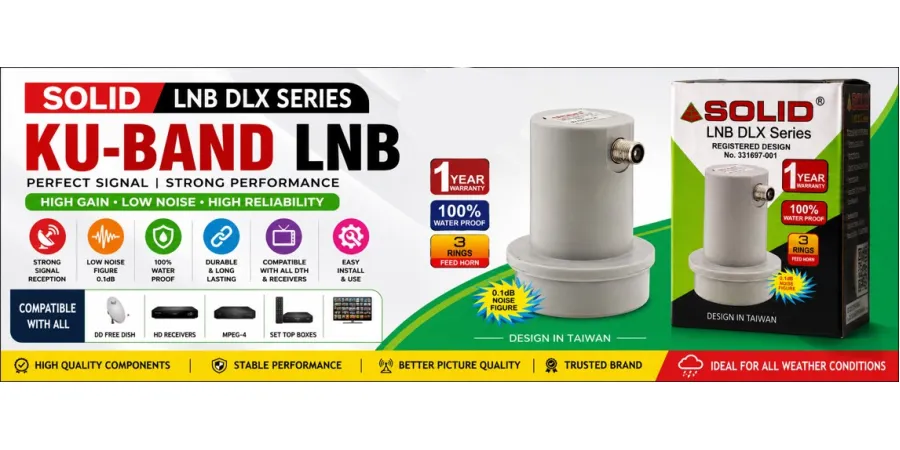
What is a Ku-Band LNB? What Makes a Good LNB and Where Can You Buy One?
Satellite TV systems rely on several important components, and one of the most critical is the LNB (Low Noise Block Downconverter). Without a properly functioning LNB, your dish antenna cannot receive satellite signals effectively.
What is a Ku-Band LNB?
A Ku-Band LNB is a device mounted at the end of a satellite dish arm. Its primary function is to receive high-frequency satellite signals reflected by the dish and convert them into lower frequencies that can be transmitted through a coaxial cable to your set-top box or satellite receiver.
The Ku-Band frequency range commonly used for DTH (Direct-to-Home) services is approximately 10.7 GHz to 12.75 GHz. Popular satellite TV providers such as DD Free Dish, Airtel Digital TV, Tata Play, and Dish TV use Ku-Band technology.
Main Functions of an LNB
- Receives satellite signals from the dish reflector.
- Amplifies weak satellite signals.
- Converts high-frequency Ku-Band signals to lower frequencies.
- Sends the converted signal to the set-top box through a cable.
Why is the LNB Important?
Even if you have a large dish antenna and a high-quality set-top box, poor LNB performance can lead to:
- Signal loss during rain.
- Pixelation and freezing of channels.
- Reduced signal quality.
- Difficulty receiving weaker channels.
The LNB is often the first component to check when experiencing satellite signal issues.
What Makes a Good LNB?
When purchasing a Ku-Band LNB, consider the following factors:
1. Low Noise Figure
The noise figure indicates how much unwanted noise the LNB introduces to the signal.
- Lower is better.
- Typical quality LNBs range from 0.1 dB to 0.3 dB.
- A lower noise figure helps improve signal quality, especially in weak signal areas.
2. Weather Resistance
A good LNB should be:
- Waterproof
- UV-resistant
- Durable in extreme temperatures
- This ensures reliable performance during rain, heat, and cold weather conditions.
3. Stable Frequency Performance
High-quality LNBs maintain stable frequency operation, which helps prevent signal fluctuations and channel interruptions.
4. Good Build Quality
Look for:
- Strong plastic housing
- Corrosion-resistant connectors
- Secure feedhorn design
- Better construction typically means a longer service life.
5. Compatibility
Ensure the LNB is compatible with your satellite system and set-top box. Most modern Ku-Band LNBs work with:
DD Free Dish
MPEG-2 Set Top Boxes
MPEG-4 Set Top Boxes
HD Receivers
HEVC Receivers
6. Single, Twin, or Quad Output
Choose according to your requirements:
Type Suitable For
Single Output One receiver
Twin Output Two receivers
Quad Output Up to four receivers
Signs That Your LNB May Need Replacement
Consider replacing your LNB if you notice:
- Frequent "No Signal" messages.
- Signal drops during light rain.
- Cracked or damaged LNB housing.
- Rusted connectors.
- Signal quality much lower than before.
Where Can You Buy a Ku-Band LNB?
You can purchase a Ku-Band LNB from:
Online Stores like
- Solid.sale
- Amazon
- Flipkart
Most DTH installation and satellite equipment shops stock Ku-Band LNBs for DD Free Dish and other satellite services.
Directly from Specialized Satellite Equipment Suppliers
Companies that sell satellite TV accessories often provide better technical support and product recommendations.
Recommended Features Checklist
Before purchasing, verify that the LNB offers:
✅ Low noise figure (0.1–0.3 dB)
✅ Waterproof construction
✅ Strong feedhorn design
✅ Universal Ku-Band compatibility
✅ Reliable brand warranty
✅ Stable signal performance
Conclusion
A Ku-Band LNB is one of the most important components of a satellite TV system. It captures satellite signals and delivers them to your receiver for viewing. Choosing a high-quality LNB with a low noise figure, weather-resistant design, and reliable construction can significantly improve signal quality and viewing experience. Whether you're setting up a new satellite system or replacing an old unit, investing in a good-quality Ku-Band LNB ensures better performance and long-term reliability.